
Public forms
Anyone without a Kissflow account can initiate a workflow in Kissflow with the help of a public form. By activating this setting, you let the users outside your organization submit their input to Kissflow.
Use case
Let us assume your organization uses process workflows as part of your Hiring process. The candidate information will be manually fed to the process form to trigger the Hiring process workflow. Now with the help of public forms, you can host a job application form online (public form) and use it to start the candidate screening process.
Public forms are only available for Enterprise accounts. Contact our support team to enable public forms for your account.
Enabling a public form
Only the Process admins can enable public forms.
- Navigate to the process for which you would like to enable the public form.
- Click the Manage button > Settings.
- Click Public form settings
- Turn on the Public form URL field and copy the link to share it with anyone outside your organization. You can also embed the public form in any website so that an external user can access it from elsewhere and submit their details to Kissflow.

Disabling a public form
- Navigate to the process for which you would like to disable the public form.
- Click the Manage button > Settings > Public form settings.
- Turn OFF the Public form URL to disable it. Once the public form is disabled, the external users cannot initiate new items. However, the items that are in progress will complete the workflow steps.
Note:
The items initiated via the public form will appear as Created by Guest in the process reports and in the process administration page.
Embedding iframe code
<iframe> code is a code snippet that can be added to any web page to let someone access a public form from elsewhere.
For example, you can host the job application form which you recently created as part of your hiring process on the Careers page of your organization's website so that anyone who is interested can directly access the application and apply.
- Click the Copy button (
 ) to copy the <iframe> code.
- Paste the code snippet to your website or any external platform where you would like to host the public form.
This code snippet is automatically generated and available when you enable the Public form URL option.
Note:
If the public form is disabled intentionally or if there is some other issue in accessing the public form, users will not be able to access the public form through the sites where this code snippet is embedded.
Form customization
You can preview and customize your public form’s title and select a background color that fits your brand. Additionally, you can display your account’s logo, adding a more professional touch to the form.

Post submission actions
Decide what happens after a user submits the form with the below options:
Show confirmation message: Set up a custom confirmation message that users will see once they submit the form. You can edit the message’s title and description to provide a clear next step or a thank-you note. Optionally, add a button below the message that can redirect users to a specific URL of your choice.

Redirect to URL: Automatically redirect users to a specified URL once they submit the form.

Message for inaccessible form
If a public form is disabled, you can customize the display message’s title and description to inform users why the form is inaccessible. You can also include a button below the message redirecting users to another page.

Enabling third-party cookies to access public forms
A Kissflow public form may not load if your browser blocks third-party cookies or other content required by the form. This can happen when you open a form directly or access one embedded on another website.
When changing settings for a specific site, open the page where the form isn’t loading. If the form is embedded on another website, apply the change to that website.
Google Chrome
- Go to Settings > Privacy and security > Third-party cookies.
- Under Sites allowed to use third-party cookies, select Add and enter the website’s address.
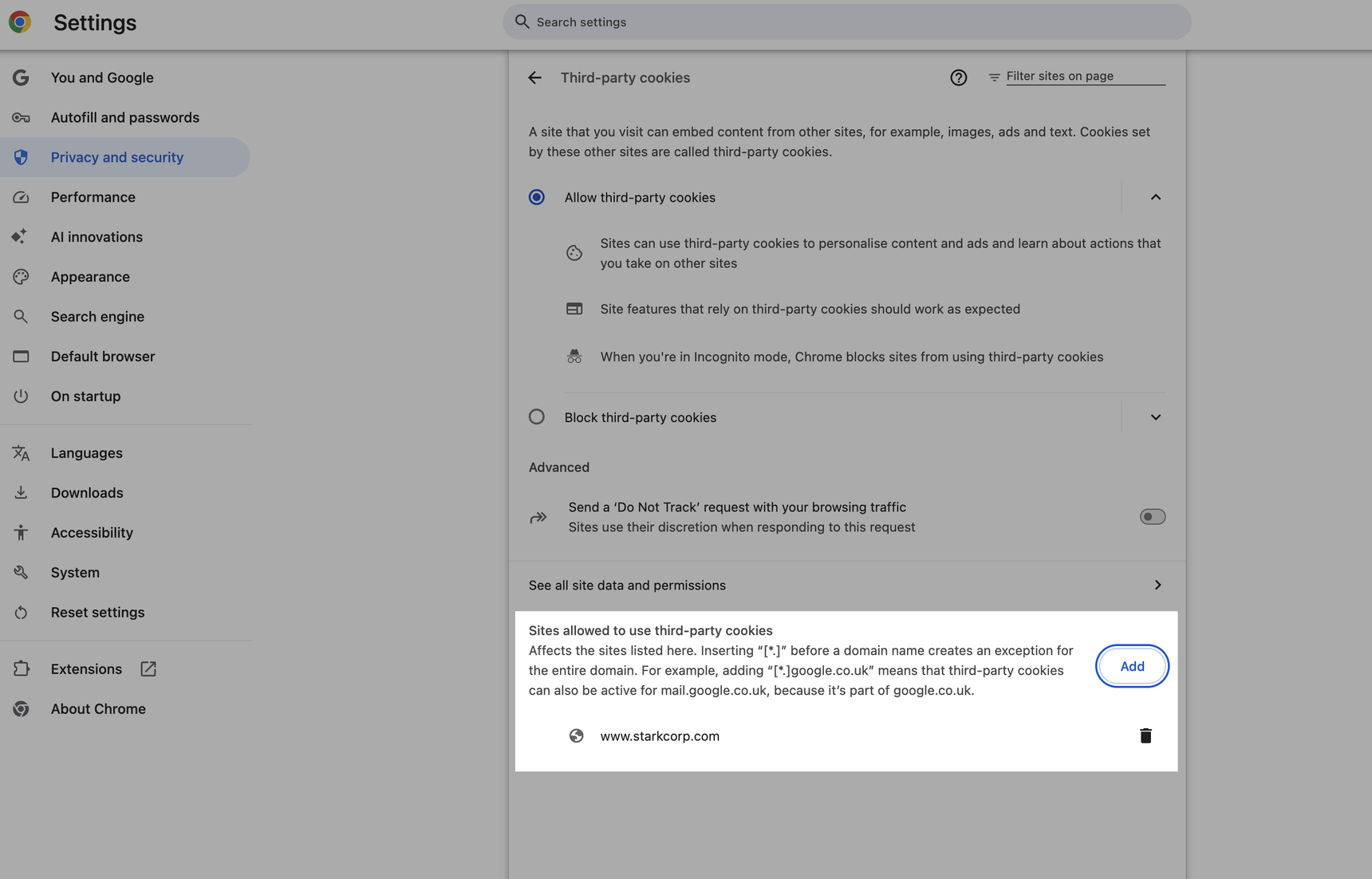
Chrome blocks third-party cookies in Incognito mode by default. Websites added to this exceptions list can use third-party cookies in both regular and Incognito windows.
If the site is not added to the exception list, in Incognito mode,
Open the site containing the public form.
In the address bar, select the Third-party cookies blocked icon.
Turn on Third-party cookies.
Close the panel to reload the page.
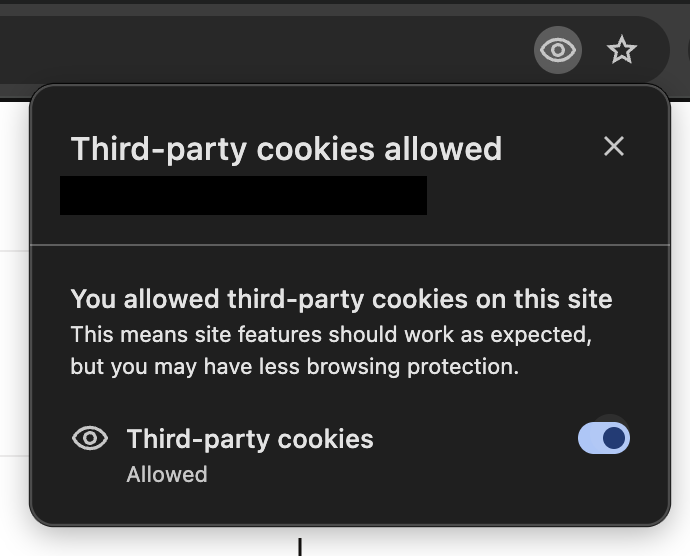
In Incognito mode, this permission lasts only for the current Incognito session.
Mozilla Firefox
Open the page containing the public form.
Select the shield icon to the left of the address bar.
Turn off Enhanced Tracking Protection for this site.
Firefox reloads the page automatically. Try accessing the form again.
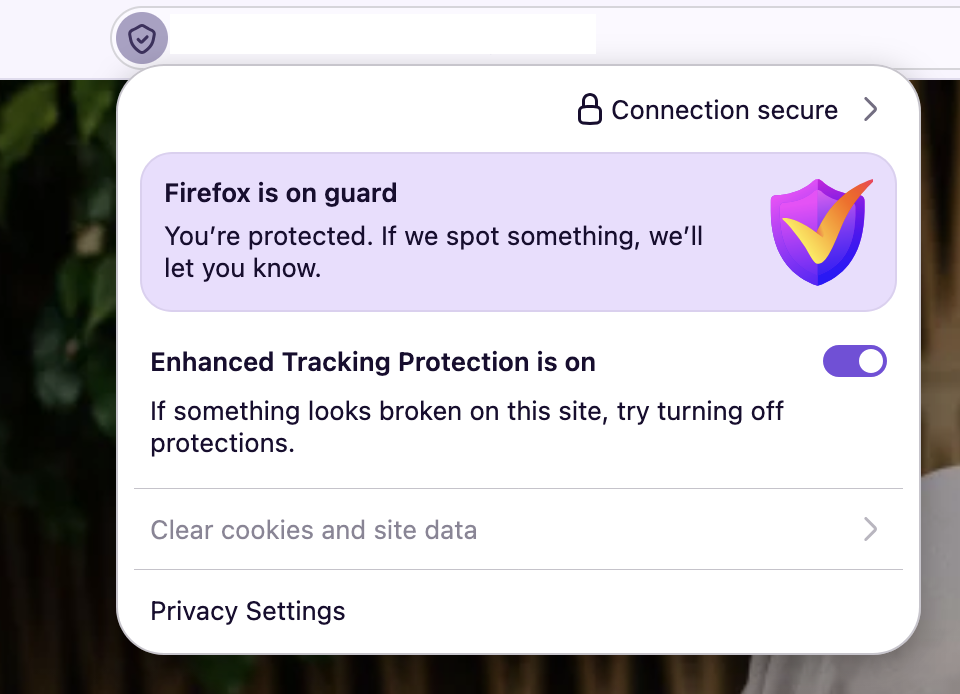
This exception also disables other tracking protections for that site. You can turn protection back on from the same panel after submitting the form.
Brave
Open the page containing the public form.
Select the Brave Shields icon in the address bar.
Expand Advanced controls, if needed.
Under the cookie control, select Allow all cookies.
Reload the page.
This change applies to the current site. You can restore its previous cookie setting after submitting the form.
Microsoft Edge
Open Settings and more (…) > Settings.
Go to Privacy, search, and services > Cookies.
Ensure Allow sites to save and read cookie data is turned on.
Turn off Block third-party cookies.
Return to the public form and reload the page.
This changes the browser’s cookie setting beyond the current site. Restore your previous setting after submitting the form.
Safari on Mac
Open Safari > Settings > Privacy.
Deselect Prevent cross-site tracking.
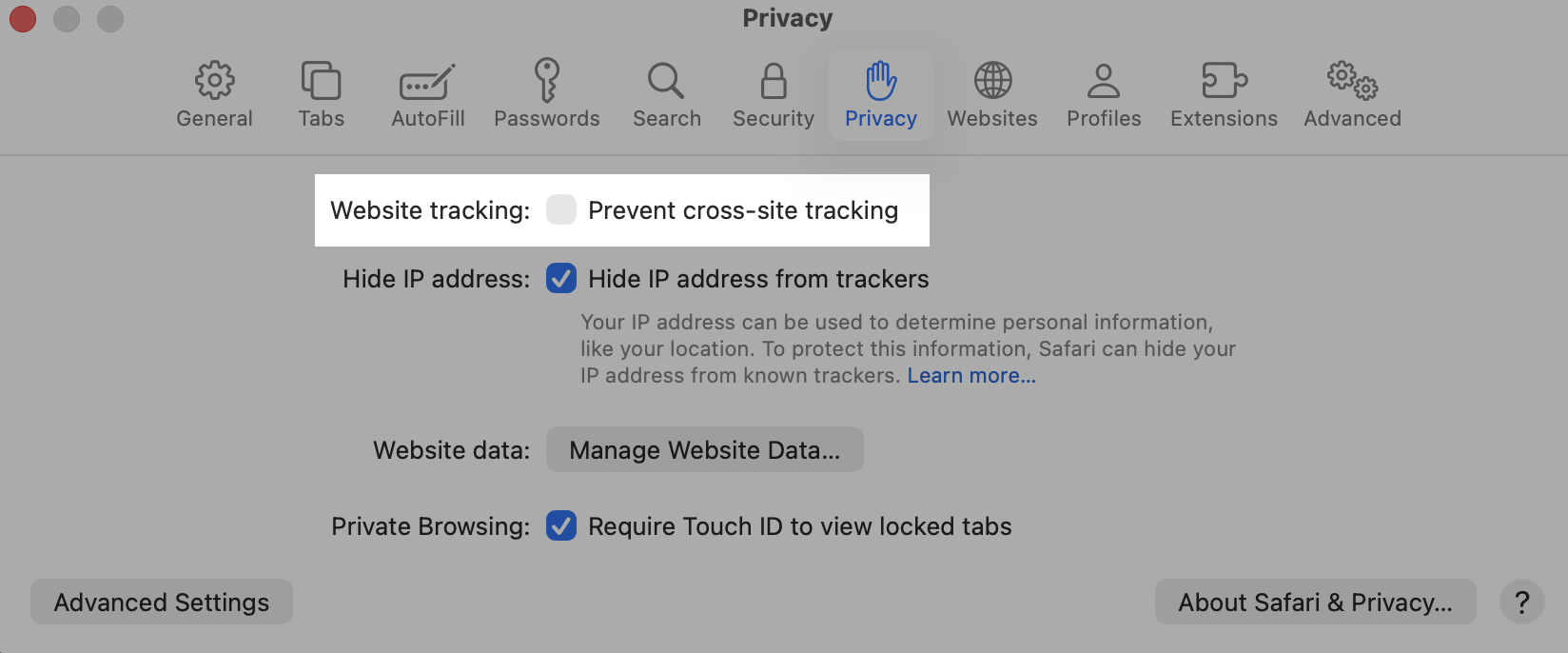
Under Settings > Advanced, ensure Block all cookies is deselected.
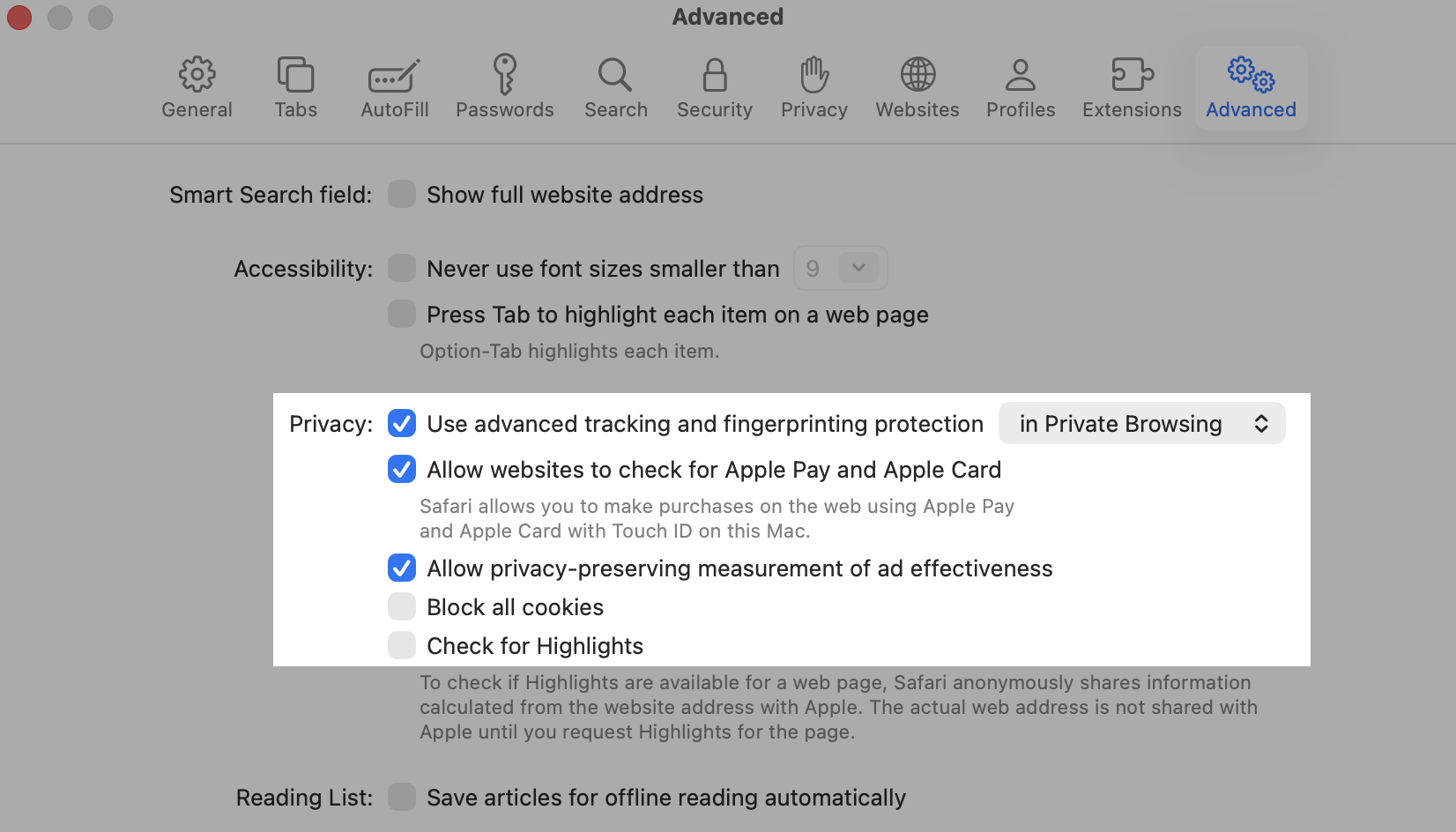
Return to the public form and reload the page.
These changes apply beyond the current site. Restore your previous settings after submitting the form.
If the form still doesn’t load in a Private Browsing window, try opening it in a regular Safari window. Safari’s Private Browsing mode includes additional tracking protections that may affect website features.
FAQ
An initiator is the recipient of a public form i.e., a person who wishes to use or uses a public form.
- As an initiator, can I reject or send back a public form?
Initiators cannot reject or send back a public form, only the step assignees and process admins can.
- Will the initiator of the form receive any notifications after they submit their details to Kissflow?
Since the initiator is not a part of Kissflow i.e. their name will be shown as Guests inside Kissflow, they will not receive any system-generated notifications.
- A colleague shared a public form link with me and when I tried to access it, it threw an error. What could have gone wrong?
The public form must have been available when your colleague used it and it must have been disabled by the Process Admin in Kissflow for some reason. You can reach out to the person who shared the link with you.
- Will the initiator be able to collaborate with the team inside Kissflow regarding their application?
No, the initiator cannot collaborate through comments with the step assignees.
- I am sure the public form I am trying to access is not disabled yet, however, I am unable to access it. How do I troubleshoot this issue?
If the form is embedded on a website, ask the person who shared it for the direct public form link and try opening that link.
Confirm with the form owner that the link is correct and the form is enabled.
If your organization manages your browser and prevents setting changes, contact your IT administrator.
Try clearing the cache and cookies in your browser.
If the issue continues, contact Kissflow Support with your browser version, whether you’re using a private window, and a screenshot of the error.